We assess processes in their actual state before any automation is designed. Task mining and SAP transaction analysis identify which candidates are genuinely automatable, where exception rates will undermine ROI, and where data quality needs to be resolved first. The output is a prioritized automation roadmap with effort, risk, and measurable benefit for each process.
We build automation using SAP Workflow Management and SAP Build Process Automation on BTP. Native tooling is more stable across SAP upgrade cycles, governed through existing change management processes, and monitored through the same operations framework your team already runs.
High-value processes span systems. We design the workflow and the integration together, using SAP Integration Suite to connect the systems and SAP Build Process Automation to orchestrate the logic. No handoff between separate workstreams.
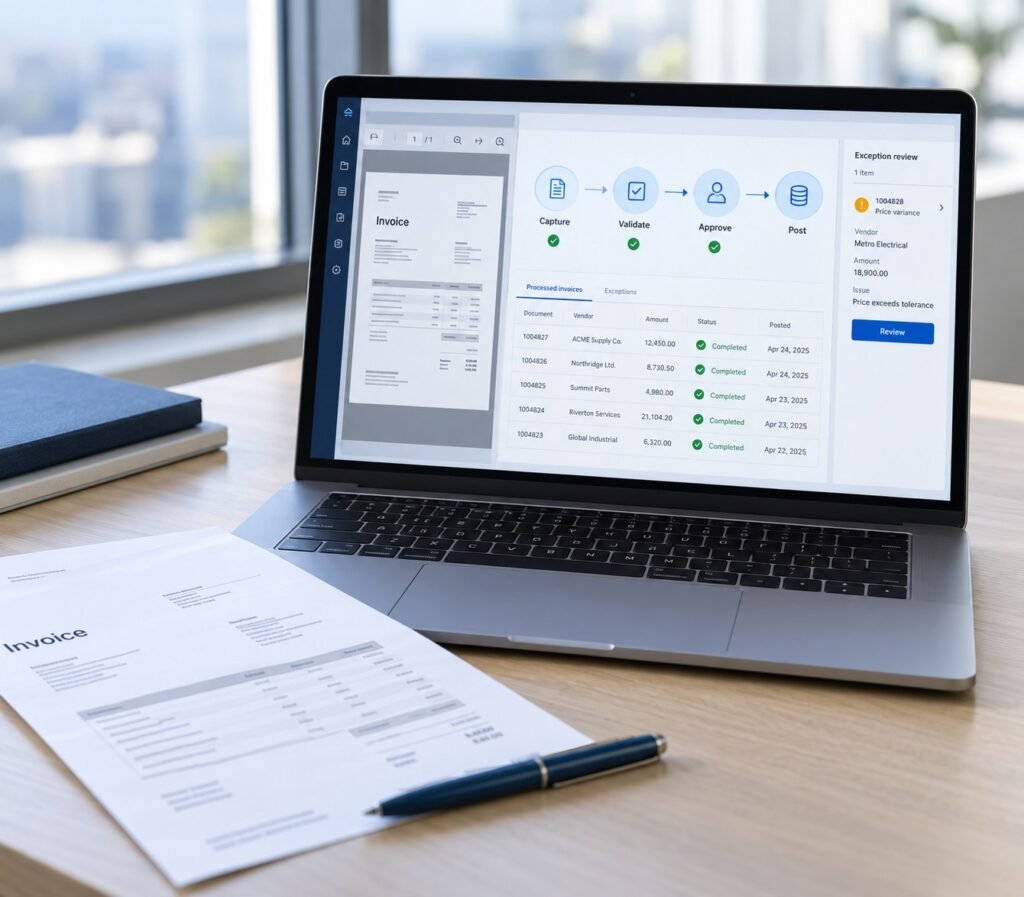
Every process we automate includes defined exception paths: which conditions escalate, what information the handler receives, and how the outcome feeds back into the automated workflow. Routine cases are handled without delay. Exceptions are handled without data loss.
We establish the operating model before deployment: bot registry, change impact procedures, testing protocols for SAP upgrades, and performance monitoring. For clients on a CoE-as-a-Service engagement, automation governance integrates directly into the existing SAP governance structure.
For organizations ready to move past task-level automation, we extend the engagement into AI-assisted decision-making and event-driven process triggers. The roadmap is built against your current SAP maturity, not an architecture that requires years of prerequisite investment.
The model works in isolation. It breaks when connected to live SAP data, real approval hierarchies, and process exceptions that don’t appear in a demo dataset.
Rule-based automation handles the script. The next step in removing manual effort requires systems that can reason over context, not just follow it.
AI-ready processes designed from the blueprint stage perform better than agents retrofitted into a system that wasn’t built for them.
We map the process as it actually runs in your SAP environment: transaction paths, exception frequencies, data quality issues, and integration touchpoints. We use SAP transaction logs and task mining to supplement stakeholder interviews, because the documented process and the operational process are rarely the same.
We design the automation against the analyzed process, not the idealized version. Exception handling, approval hierarchies, and integration dependencies are resolved in the design phase. Tooling selection is driven by the process requirements and your existing SAP licensing, not by a preferred product.
We build and run one agent for one process in production first. Outcomes are measured and decision logic refined before scope expands. This is how a proof of concept becomes a program with a business case behind it.
We build in SAP-native tooling where it is available and fits the requirement. Testing covers the happy path, the defined exception scenarios, and the SAP upgrade simulation to confirm stability.
We establish the monitoring and governance framework before go-live: performance metrics, alert thresholds, change management procedures, and the link back to your SAP CoE or AMS team. The engagement does not close when the automation goes live. It closes when the governance is in place.
The gap between a process map and a production process is where automation projects fail. Candent’s IPA practice is built on SAP delivery experience, not on RPA tool expertise alone.
When automation is designed by people who understand how SAP processes actually run, fewer exceptions need human handling and fewer bots require emergency fixes after upgrades.
Identify the highest-impact automation candidates through objective process analysis before the automation design starts.
Extend beyond workflow automation to AI agents that make decisions, handle multi-step tasks, and escalate with context.
Automate processes that span multiple systems with a stable, governed integration layer beneath the automation.
Embed automation governance into your SAP Center of Excellence so that every new automation is assessed, tested, and maintained to a consistent standard.